



For me, AMC Theatres: Movies & More is most useful when I am already thinking about going to the cinema and want to handle the practical details in one place. It is a free entertainment app from AMC Theatres that brings showtimes, ticket planning, food options, and rewards into the same mobile experience. That sounds straightforward, but the real benefit is reducing the small bits of friction between choosing a film and actually sitting down to watch it.
I would recommend it first to regular AMC visitors, especially people who dislike arriving without a plan. It is less compelling for someone who watches films mostly at home, rarely visits AMC locations, or prefers comparing every nearby cinema through a neutral service. The app has a clear purpose rather than trying to be a complete movie discovery platform, and that focus is both its main strength and its main limitation.
What the AMC app does well in everyday use
The central workflow is easy to understand: choose a movie, check available times, select a cinema, and continue toward tickets. I like that this puts the decision in the order most people naturally make it. You do not have to begin by remembering a theater schedule or search through unrelated entertainment content. If I know what I want to see, the app helps me move from intention to booking without leaving the AMC environment.
Showtimes are particularly useful when plans are still changing. Instead of checking a theater website, then opening a separate ticket service, I can use the same app to compare sessions at a convenient location. That matters on busy evenings, when the difference between two start times can affect dinner, parking, or whether everyone in a group can arrive together. The app is at its best as a planning tool, not merely as a digital poster for current releases.
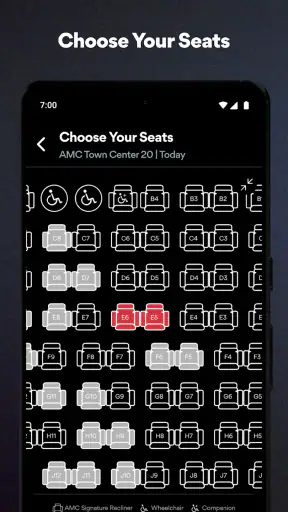
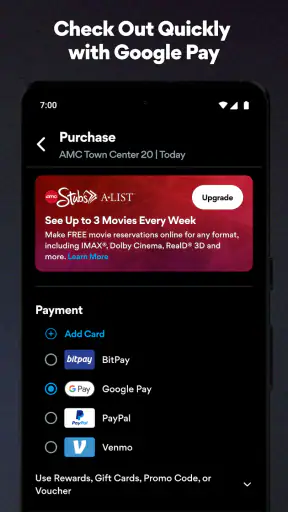
Ticket purchasing is another practical advantage. Mobile booking can be more comfortable than making a decision at the theater entrance, particularly when I want to choose a session before leaving home. It also gives a group a chance to settle on a time in advance rather than debating in the lobby. The process still depends on the selected theater and the choices available for that screening, but having the transaction connected to the showtime makes the whole visit feel more organized.
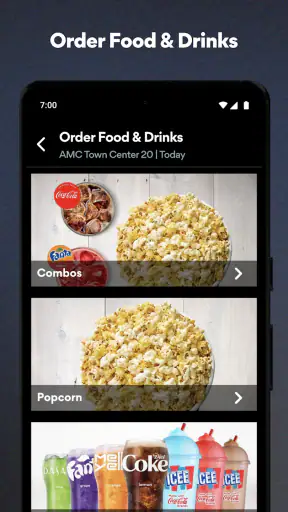
The food section gives the app a wider role than a simple schedule viewer. When I am already planning a movie night, being able to consider theater food during the same process is convenient. It encourages me to think about the visit as a complete outing: film, timing, tickets, and refreshments. That is a small distinction, but it is one of the reasons I find the app more useful than a basic cinema calendar.
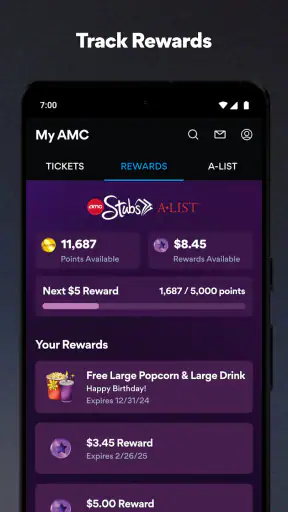
Rewards also make repeated use more worthwhile. Occasional visitors may only open the app when they need a ticket, while frequent guests have a reason to return and keep their theater activity connected to the same account experience. I would not install it solely because of rewards if I almost never attend AMC, but for a regular customer, the combination of planning and membership-related benefits gives the app a stronger everyday purpose.
One of my favorite practical habits is checking the schedule before making other plans, rather than beginning with a group chat and hoping a suitable session appears later. I can narrow the choice by location and time first, then ask friends to choose among realistic options. This avoids the common situation where everyone agrees on a film but discovers that the only convenient screening is already too late or sold out.
Small workflows that make a real difference
A useful approach is to treat the app as a pre-visit checklist. I first select the location, then compare the available times, then think about food and rewards before confirming anything. That order helps me avoid choosing a screening that looks good in isolation but does not fit the rest of the evening. It is a simple workflow, yet it uses the app more intelligently than opening it only at the last minute.
For a family or group, I would also recommend deciding the theater and screening before passing the phone around. The app can support the booking process, but it cannot resolve disagreements about film choice, seat preference, or arrival time. Agreeing on those basics first makes the mobile transaction quicker and reduces the chance of repeatedly backing out of selections.
Another overlooked benefit is using the app to compare the cost and convenience of different visit times before committing. A later show may be attractive, but an earlier option could fit transport or meal plans better. The app does not make that judgment for me; it gives me the schedule in a form that makes the trade-off easier to see.
If I am already near a theater, I still prefer checking the app before walking inside. That lets me confirm that the session I want is available and gives me a chance to consider alternatives. This is especially useful when I am flexible about the exact start time. A few minutes of planning on the phone can be better than arriving at the counter with only one option in mind.
The app’s long presence also matters. AMC Theatres released it on March 20, 2012, and the current version is 7.0.139. I see that history in the way it is built around a familiar cinema routine rather than a novelty feature. It is designed for a recurring behavior: find a session, arrange the visit, and return when the next movie catches your attention.
Where it fits among other movie apps
Compared with a general movie-discovery app, this one is more action-oriented. A discovery service may be better for browsing reviews, exploring films across many chains, or deciding what to watch when I have no title in mind. AMC Theatres: Movies & More is better once the decision is moving toward an AMC location. It is not trying to replace every kind of film guide, and I think that is a sensible boundary.
Compared with using a mobile browser, the dedicated app feels more direct for repeat visits. A browser can be perfectly adequate for a one-time search, especially if I do not want another app installed. The dedicated experience becomes more attractive when I regularly check AMC schedules, use the same theater, or want rewards and ticket planning together. In that situation, the app saves me from repeating the same search path.
Compared with buying tickets at the theater, mobile planning gives me more control before I leave home. The trade-off is that I must make decisions earlier and pay attention to what I am selecting on a smaller screen. For spontaneous visitors who are happy to decide at the venue, the app may feel unnecessary. For people who want certainty, it is the more comfortable option.
Its audience is also narrower than the broad label “entertainment” might suggest. This is not an all-purpose streaming app, a social movie community, or a replacement for a home media library. Its value depends on a physical cinema visit and, more specifically, on the relevance of AMC Theatres to that visit. That makes the app focused, but it also means its usefulness can drop sharply outside that context.
The friction I noticed before recommending it
The biggest limitation is the dependence on the AMC ecosystem. If I want to compare several cinema chains side by side, I would rather use a broader ticketing or movie-search option. This app naturally centers AMC locations, so it is not the best tool for someone whose nearest or preferred theater changes from week to week. Its convenience comes from specialization, and specialization means less flexibility beyond that chain.
There is also a planning cost. A mobile booking flow is helpful when I know the film, location, and approximate time, but it can feel like extra work when I am undecided. Browsing titles, comparing screenings, and considering food and rewards can turn a quick question into several choices. I appreciate the control, yet I would not open it expecting the app to make the entire evening effortless without any input from me.
Group bookings can create their own friction. The app can help one person organize the purchase, but different preferences still have to be settled manually. A group may disagree about the film, the time, or where to sit, and those conversations happen outside the app. I find it useful for executing a decision, not for making a group reach one.
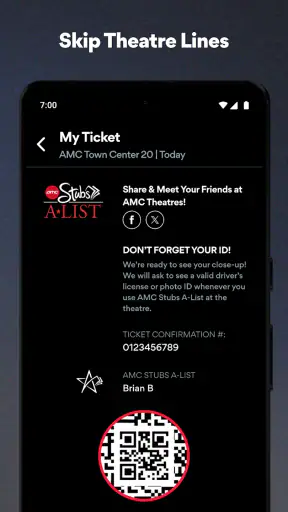
Another trade-off is that convenience encourages last-minute dependence on the phone. If I arrive with a low battery, poor reception, or a distracted group, the digital route can feel less comfortable than simply speaking with theater staff. I would not make the app the only part of my plan for an important outing. Keeping the booking details accessible and allowing a little extra time is sensible, particularly when several people are involved.
The Teen content rating is worth keeping in mind for households. It does not automatically make the app unsuitable for every younger user, but parents should decide whether their child should manage cinema browsing and purchases independently. I see this as an app for personal or family planning with adult oversight when needed, rather than something I would hand to a very young child without guidance.
Who will get the most from it
Regular AMC customers are the clearest audience. If I visit often, the app gives me a repeatable way to check times, arrange tickets, consider food, and stay connected with rewards. The free price removes the main barrier to trying it, although the real value still depends on whether AMC is a theater I actually use. Installing it makes sense when the cinema is part of my normal routine, not simply because the download costs nothing.
It also suits people who coordinate movie nights around tight schedules. Imagine finishing work, meeting a friend for dinner, and trying to catch a specific film without wasting time at the theater. I can check the schedule earlier, choose a realistic session, and think through food before leaving. That does not eliminate every surprise, but it gives the evening a clearer shape and reduces avoidable decisions at the last minute.
Families may appreciate the planning side, particularly when arrival times and food choices matter. I would still have one person manage the booking rather than asking several family members to make changes at once. The app works best when it is used as a shared plan with one clear organizer, while the rest of the group confirms the details before purchase.
Movie fans who enjoy discovering films across many venues should probably pair it with another service. I would use a broader option to explore what is playing in the area, then switch to the AMC app when an AMC screening becomes the preferred choice. That combination is more effective than expecting one app to handle both wide discovery and chain-specific booking equally well.
People who should skip it are those who rarely attend theaters, never visit AMC, or mainly want reviews and recommendations. They may install it and find that its practical tools do not justify another icon on the phone. Likewise, someone who always buys tickets in person and dislikes advance planning may see little benefit. The app is not weak because it lacks those roles; it simply serves a different habit.
Performance, maturity, and day-to-day confidence
With an average rating of 4.7 from around 311 thousand ratings, the app has clearly earned strong approval from a large user base. I treat that as a useful signal rather than a guarantee that every visit will be perfect. Cinema bookings involve changing schedules, busy periods, and individual theater circumstances, so my own experience depends partly on how well the app’s information matches the visit I am planning.
It has passed the scale of a niche utility, with over 5 million installs. That makes its role easier to understand: this is a mainstream companion for people who use AMC digitally, not an experimental side tool. I also like that the developer is identified plainly as AMC Theatres, because the app’s purpose and ownership are immediately clear.
The app is free, which makes testing the workflow low risk. I can see whether it fits my local cinema habits without paying simply to access the basic experience. Still, “free” does not mean every user will find it worthwhile. The deciding factor is frequency: an AMC regular can get repeated value, while an occasional visitor may be better served by a browser or a wider movie-search app.
Device compatibility is reasonably broad, with a minimum operating system of Android 8.0. That helps users who are not carrying a new phone, although anyone with an older device should check compatibility before planning around it. I would rather verify that my phone can run the current app before reaching the theater, especially if I rely on mobile ticket access.
My final recommendation
After using it as a cinema-planning tool, I see AMC Theatres: Movies & More as a focused and practical app rather than an essential movie companion for everyone. Its strongest evidence is the way separate parts of a theater visit—showtimes, tickets, food, and rewards—are brought into one AMC-centered workflow. That focus makes repeat visits easier and gives organized moviegoers a clear reason to return.
Its weakness is equally clear: the experience is most valuable only when AMC is part of my actual plans. It is not the right choice for broad theater comparison, deep film discovery, or people who almost never go to the cinema. I would also leave room for human judgment when coordinating groups, because no booking interface can replace agreeing on the evening first.
For my friend who visits AMC regularly, I would say install it and use it before leaving home, not just when standing in line. Check the location, compare the session times, decide how food fits into the schedule, and let one person manage the final booking. For everyone else, I would choose a general movie app or browser first and add this one only when AMC becomes the theater I use consistently.
Overall, the best reason to use this app is control over the whole cinema visit. It turns a loose plan into a more deliberate one without pretending to be a universal movie service. That makes it a worthwhile free download for AMC regulars, a convenient occasional tool for planned outings, and an easy skip for viewers whose movie life happens mostly elsewhere.


